본문 바로가기 주메뉴 바로가기


공지

The state of our oceans: Progress and warning signs

본문

페이지 정보

profile_image
작성자 P4P
작성일 2026-04-01


Welcome to Pacific Current — where we share the progress, challenges and opportunities shaping our work to advance climate solutions, reduce pollution and protect ocean and Arctic ecosystems.


 READ ON OUR BLOG


Climate 


Singapore marks milestone with first electric tug in Southeast Asia

What does a zero-emission port actually look like? Singapore is offering a glimpse with Southeast Asia's first fully electric tug, marking a major milestone in decarbonizing one of the region's busiest ports. Backed by strong industry collaboration, this achievement shows maritime decarbonization is no longer theoretical, it's already underway on the water. Now, the challenge and opportunity is scaling from a single vessel to full fleet-wide adoption to unlock cleaner air, quieter operations and lasting climate impact.


 LEARN MORE


Marine 


The 2025 Reef Check survey results and what they mean for Malaysia's coral reefs


Malaysia's coral reefs are declining at an alarming rate, with new survey data showing significant losses in just the past few years. In this blog, Julian Hyde — Pacific Environment's Malaysia senior marine program advisor and chief executive officer of Reef Check Malaysia, one of our key partners — explores what's driving the decline, including bleaching, pollution and tourism pressure, and why it matters for food security, livelihoods and coastal communities. He also highlights the urgent need to build reef resilience by reducing local impacts and calls for stronger action to protect these vital ecosystems.


 READ MORE


Ports


New report: Inside Japan's push for carbon neutral ports 

A new study by the University of California, Berkeley, commissioned by Pacific Environment, examines Japan's approach to decarbonizing maritime ports, including its Carbon Neutral Port certification and Yokohama's initiatives. As global momentum for cleaner shipping grows, the report highlights Japan's efforts to set benchmarks for reducing emissions and improving air quality in port communities. It also explores how policies and infrastructure must evolve alongside new technologies.


 EXPLORE NOW  


In the News

Explore some of our latest media highlights and expert commentary featured in leading outlets.


17
공지

일본의 탄소중립항만 이니셔티브 및 요코하마항만의 탈탄소 계획 분석 (An Analysis of Japan's Carbon Ne…

본문

페이지 정보

profile_image
작성자 P4P
작성일 2026-04-28


보고서(영문) 다운로드 (PDF)


An Analysis of Japan's Carbon Neutral Port Initiative and Yokohama Port and Harbor Decarbonization Plan


국문 요약

Pacific Environment가 추진하고 UC Berkeley Goldman School of Public Policy가 수행한 이 An Analysis of Japan’s Carbon Neutral Port Initiative and Yokohama Port and Harbor Decarbonization Plan   보고서는 일본의 Carbon Neutral Port(CNP) 인증제도와 요코하마항 탈탄소화계획을 분석합니다.

보고서는 일본이 항만 탈탄소화 분야에서 의미 있는 정책적 진전을 이루고 있습니다. 특히, 일본의 CNP 제도가 항만 온실가스 감축, 이해관계자 간 협력, 전력 및 연료 인프라 계획을 위한 체계적인 접근을 제공하고 있음을 보여줍니다.

요코하마항 사례는 전기화, 대체연료, 수소 공급망, 항만 에너지 시스템 등 120개 이상의 프로젝트를 통해 항만이 물류 거점의 기능을 넘어서서 보다 통합적인 에너지 거점으로 발전해 나갈 수 있는 가능성을 보여줍니다. 또한 보고서는 육상전원공급(OPS/AMP)의 확대, 항만 전력 인프라에 대한 지속적인 투자, LNG 관련 배출 관리, 무탄소 연료 중심의 정책적 정렬 등 향후 고려할 수 있는 다양한 방향을 함께 제시합니다.

Pacific Environment는 일본의 다양한 기술적 접근이 항만 탈탄소화 전환을 가속화하는데 중요한 기반이 되고 있음을 인식하고 있습니다. 이와 함께, 단기적으로 적용 가능한 해법과 중장기적 기술 발전 경로를 균형 있게 고려하는 것이 중요하다는 점을 지속적으로 강조할 것입니다. 또한, 간접 토지 지용 변화와 관련된 우려를 고려하여, 바이오매스를 탈탄소화 수단으로 활용하는 것에 대해서는 보다 신중한 입장을 유지하고 있습니다.

본 보고서가 아시아 지역의 항만 탈탄소화를 위한 유용한 참고 자료로 활용되기를 기대하합니다. 아울러, 보고서에 포함된 biomass 관련 내용은 Pacific Environment의 공식 입장을 의미하지 않음을 밝힙니다.


영문 요약

This report, An Analysis of Japan's Carbon Neutral Port Initiative and Yokohama Port and Harbor Decarbonization Plan, commissioned by Pacific Environment and prepared by University of California, Berkeley's Goldman School of Public Policy, analyzes Japan's Carbon Neutral Port (CNP) Certification framework and the Port of Yokohama's decarbonization plan.

The report highlights that Japan has made meaningful policy progress in port decarbonization. In particular, it demonstrates how the CNP framework provides a structured approach to reducing port-related greenhouse gas emissions, fostering stakeholder collaboration, and planning energy and fuel infrastructure.

The port of Yokohama case illustrates the potential for ports to evolve beyond traditional logistics hubs into more integrated energy hubs, supported by over 120 projects spanning electrification, alternative fuels, hydrogen supply chains and port energy systems. The report also outlines a range of areas for further consideration, including the expansion of shore power (OPS/AMP), continued investment in port electricity infrastructure, management of Liquefied Natural Gas (LNG)-related emissions and alignment toward zero-emission fuels.

Pacific Environment recognizes that Japan's diverse technological approaches provide an important foundation for accelerating the transition to port decarbonization. At the same time, it will continue to emphasize the importance of balancing near-term actionable solutions with longer-term technological pathways. Pacific Environment maintains a more precautionary stance on the use of biomass as a decarbonization solution given concerns related to indirect land-use change.

In addition, it will seek to advance a more balanced approach to biomass-related issues through ongoing dialogue with a wide range of stakeholders.

This report is intended to serve as a useful reference for advancing port decarbonization efforts across Asia. It should also be noted that the positions on biomass presented in the report do not necessarily reflect the official position of Pacific Environment. 


16
공지

Ports for People 2025년 10월 뉴스레터

본문

페이지 정보

profile_image
작성자 P4P
작성일 2025-11-17

Dear Hyunju, 


Welcome to the Ports for People monthly newsletter, where we share campaign updates, highlight news and insights relevant to our work and feature a special story related to ports and shipping. This newsletter is brought to you by Pacific Environment.


Smart and Green Energy Maritime Conference fosters international collaboration


Ulsan Port Authority invited Pacific Environment, Hyundai Merchant Marine (HMM), Shanghai Municipal Transportation Commission (SMTC), Fung Research and Korea Research Institute of Ships and Ocean Engineering to the session “Green Shipping Routes and Maritime Logistics” at the Smart and Green Energy Maritime Conference in Gyeongnam, Republic of Korea. HMM outlined its climate commitments through the Net Zero Strategy and the Korea Research Institute shared new research on electric-propulsion zero-emission vessels and a vision for a Mokpo-Jeju coastal green shipping corridor.


In their presentations, Wang Yanjia with SMTC, Freda Fung with Fung Research and Pacific Environment’s Davina Hurt highlighted concrete regional strategies and reaffirmed the opportunities for international cooperation linking East Asia and the U.S. West Coast. The presentations emphasized the critical role green shipping corridors and clean fuel deployment play in transforming ports into clean-energy hubs and the importance of government and port support to narrow the cost gaps for clean fuels. Pacific Environment will continue to play this geographic bridging role, fostering collaboration that accelerates the global transition to decarbonized shipping.


Pacific Environment facilitates national conversation on offshore wind and decarbonizing shipping and ports


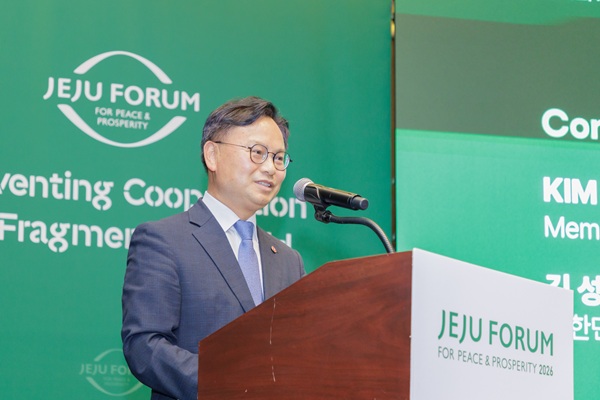
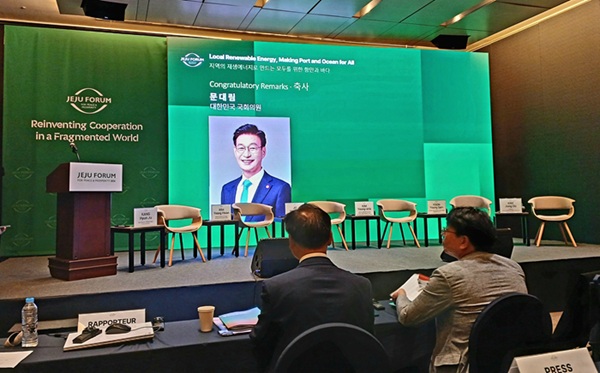
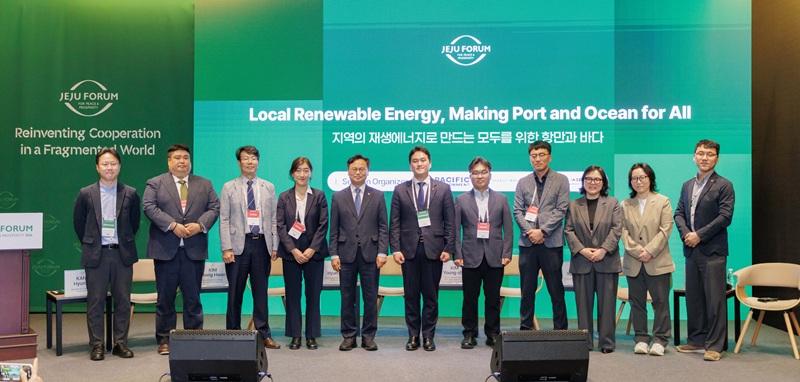
Solutions for Our Climate and Pacific Environment co-hosted a policy forum, “From Wind to Fuel: Offshore Wind and the Decarbonization of Shipping and Ports,” at the Republic of Korea’s National Assembly with Reps. Kim Won-i and Moon Dae-rim.


Presentations focused on key issues of the Offshore Wind Special Act — which shifted offshore wind development to a government-led system — the role of ports as renewable energy hubs and the idea to introduce electric vessels to reduce greenhouse gas emissions in domestic shipping. The forum reaffirmed that offshore wind can serve as a major driver of regional economic growth, while underlining the importance of public acceptance and community participation. It also suggested that green shipping corridors could be developed domestically using electric vessels that would require dedicated ship technologies and port infrastructure. Linking offshore wind power as an energy source for ports is still a new concept in Korea, but participants agreed it merits further policy review and a roadmap to support port and shipping decarbonization.


Climate Week NYC shows the future of shipping is already here

Pacific Environment staff were on the ground at Climate Week NYC, bringing visibility to the connection between climate and ocean shipping. Highlights from the week included a tour of Fortescue’s Green Pioneer, the world’s first dual-fueled ammonia-powered vessel. The vessel is a tangible demonstration that zero-emission shipping is here and that ammonia can be used safely as a marine fuel when proper protocols and technologies are in place — a critical step in building trust and momentum for clean shipping solutions.


At the Partnerships for the Future Summit hosted by the Consulate General of Denmark, our team connected with Arsenio Dominguez, secretary-general of the International Maritime Organization, who expressed cautious optimism that the IMO will adopt the proposed Net Zero Framework to drive down emissions from the shipping industry. Optimism for the momentum behind climate action was a key theme throughout the week. Former U.S. Climate Envoy John Kerry emphasized this point with his hopeful comments that the green energy transition will be the greatest economic transition since the Industrial Revolution and can’t be stopped.


Korea launches project to develop a national green shipping corridor model

Pacific Environment’s Republic of Korea team participated in a multi-stakeholder workshop to advise on the country’s green shipping corridors. This three and a half year long collaborative project aims to demonstrate carbon-neutral fuel bunkering technologies and trial operations (including methanol and ammonia bunkering), design policies and international standards to support green shipping corridor expansion and develop a Korean feasibility model for green shipping corridors. By establishing the necessary technologies and policies to support the safe deployment of new green technologies and fuels, the project aims to contribute to the country’s and the International Maritime Organization’s decarbonization goals while also creating jobs through the expansion of its shipping industry.


The Korean Register leads this initiative with participation from various research universities, Ulsan Port Authority, Busan Port Authority, industry partners including HMM and HD Hyundai and government-affiliated institutions like Korea Maritime Institute, Korea Maritime Transportation Safety Authority and Korea Institute of Maritime and Fisheries Technology.


☞ Southern California | Sign our petition to call on the South Coast Air Quality Management District to pass a strong Ports Indirect Source Rule that’ll put an end to life-shortening pollution at the San Pedro Bay ports.


Republic of Korea | We’re hiring! Pacific Environment seeks a Country Director, Republic of Korea to support our work in Korea focused on the climate emergency and maritime shipping. We are excited to pursue new opportunities to achieve the transition to zero-emission shipping and more in South Korea.


 California | We’re hiring! Pacific Environment seeks a State Climate Policy Manager to advance our climate priorities and provide critical policy support for Pacific Environment’s campaigns on zero-emission shipping and ports in California.


 ☆ Highlight: Plugged in for a cleaner future: Seattle and Tacoma lead shore power advances

Investments in shore power infrastructure at the Port of Seattle and Port of Tacoma “show what’s possible when ports commit to cleaner operations — and our communities deserve nothing less,” writes Pacific Environment’s Climate Campaign Director, Ports, Fern Uennatornwaranggoon. “Seattle and Tacoma are proving that strong economic ports can also be clean ports.”


Shipping news

 ▲ Shipping launches first training playbook for handling ammonia, methanol and hydrogen


 ▲ Container shipping leads maritime transition with over 500 alternative-fueled vessels on order


 ▲ Alternative marine fuels uptake will speed up after 2030, shipping executives say


 ▲ A trillion-plus investment gap threatens to stall shipping’s energy transition, new report reveals


Environment + climate news

  China’s clean energy boom is denting fossil fuel demand


 ♠ Climate change ‘beyond scientific dispute,’ National Academies report says


 ♠ Trump administration dissolves group that authored controversial report sowing doubt in the severity of climate change


 ♠ The world’s watching. Greens are unsure what to say.


October feature | Our obligation to our oceans

On Sept. 25, the world celebrated World Maritime Day, with the theme “Our Ocean, Our Obligation, Our Opportunity” reminding us of our responsibility and our opportunity to care for the ocean. Shipping is the engine of global trade but it’s also one of the dirtiest industries on the planet, responsible for nearly 3% of worldwide greenhouse gas emissions and major sources of toxic air pollution.


At least 31 million people in the United States live within three miles of a major port. Every day, people living near ports breathe in harmful diesel exhaust. This World Maritime Day, we were reminded that the shipping industry must play a leading role in building a healthier, climate-safe future. The good news: Momentum for clean shipping is accelerating. From local actions in California and Washington, to national legislation in Congress, to groundbreaking but unfinished progress at the International Maritime Organization, the world is beginning to turn the tide on dirty shipping. Pacific Environment will continue to fight for ambitious, just and urgent action to hold polluters accountable and ensure shipping transitions to a truly zero-emission future. Read more about the work happening to clean up the shipping industry here.


Thanks for reading!


Find us @pacenvironment on social!


Pacific Environment confronts our most urgent environmental issues by connecting local and global movements, 

catalyzing policy change and inspiring action for the benefit of people and our planet. Together, 

we promote a healthy climate, reduce pollution and conserve biodiversity for an equitable and thriving future.


Pacific Environment

1012 Torney Ave

San Francisco, CA 94129

United States 


If you believe you received this message in error or wish to no longer receive email from us, please unsubscrib

15
공지

Ports for People 2025년 10월 뉴스레터

본문

페이지 정보

profile_image
작성자 P4P
작성일 2025-11-12

Welcome to the Ports for People monthly newsletter, where we share campaign updates, highlight news and insights relevant to our work, and feature a special story related to ports and shipping. This newsletter is brought to you by Pacific Environment.


Smart and Green Energy Maritime Conference fosters international collaboration

Ulsan Port Authority invited Pacific Environment, Hyundai Merchant Marine (HMM), Shanghai Municipal Transportation Commission (SMTC), Fung Research, and the Korea Research Institute of Ships and Ocean Engineering to the session “Green Shipping Routes and Maritime Logistics” at the Smart and Green Energy Maritime Conference in Gyeongnam, Republic of Korea. HMM outlined its climate commitments through the Net Zero Strategy, and the Korea Research Institute shared new research on electric-propulsion zero-emission vessels and a vision for a Mokpo–Jeju coastal green shipping corridor.

In their presentations, Wang Yanjia with SMTC, Freda Fung with Fung Research, and Pacific Environment’s Davina Hurt highlighted concrete regional strategies and reaffirmed the opportunities for international cooperation linking East Asia and the U.S. West Coast. The presentations emphasized the critical role green shipping corridors and clean fuel deployment play in transforming ports into clean-energy hubs and the importance of government and port support to narrow the cost gaps for clean fuels. Pacific Environment will continue to play this geographic bridging role, fostering collaboration that accelerates the global transition to decarbonized shipping.

Pacific Environment facilitates national conversation on offshore wind and decarbonizing shipping and portsSolutions for Our Climate and Pacific Environment co-hosted a policy forum, “From Wind to Fuel: Offshore Wind and the Decarbonization of Shipping and Ports,” at the Republic of Korea’s National Assembly with Reps. Kim Won-i and Moon Dae-rim.

Presentations focused on key issues of the Offshore Wind Special Act — which shifted offshore wind development to a government-led system — the role of ports as renewable energy hubs, and the idea to introduce electric vessels to reduce greenhouse gas emissions in domestic shipping. The forum reaffirmed that offshore wind can serve as a major driver of regional economic growth, while underlining the importance of public acceptance and community participation. It also suggested that green shipping corridors could be developed domestically using electric vessels that would require dedicated ship technologies and port infrastructure. Linking offshore wind power as an energy source for ports is still a new concept in Korea, but participants agreed it merits further policy review and a roadmap to support port and shipping decarbonization.

Climate Week NYC shows the future of shipping is already herePacific Environment staff were on the ground at Climate Week NYC, bringing visibility to the connection between climate and ocean shipping. Highlights from the week included a tour of Fortescue’s Green Pioneer, the world’s first dual-fueled ammonia-powered vessel. The vessel is a tangible demonstration that zero-emission shipping is here and that ammonia can be used safely as a marine fuel when proper protocols and technologies are in place — a critical step in building trust and momentum for clean shipping solutions.


At the Partnerships for the Future Summit hosted by the Consulate General of Denmark, our team connected with Arsenio Dominguez, secretary-general of the International Maritime Organization, who expressed cautious optimism that the IMO will adopt the proposed Net Zero Framework to drive down emissions from the shipping industry. Optimism for the momentum behind climate action was a key theme throughout the week. Former U.S. Climate Envoy John Kerry emphasized this point with his hopeful comments that the green energy transition will be the greatest economic transition since the Industrial Revolution and can’t be stopped.

More Campaign UpdatesKorea launches project to develop a national green shipping corridor modelPacific Environment’s Republic of Korea team participated in a multi-stakeholder workshop to advise on the country’s green shipping corridors. This three-and-a-half-year collaborative project aims to demonstrate carbon-neutral fuel bunkering technologies and trial operations (including methanol and ammonia bunkering), design policies and international standards to support green shipping corridor expansion, and develop a Korean feasibility model for green shipping corridors. By establishing the necessary technologies and policies to support the safe deployment of new green technologies and fuels, the project aims to contribute to the country’s and the International Maritime Organization’s decarbonization goals while also creating jobs through the expansion of its shipping industry.

The Korean Register leads this initiative with participation from various research universities, Ulsan Port Authority, Busan Port Authority, industry partners including HMM and HD Hyundai, and government-affiliated institutions like Korea Maritime Institute, Korea Maritime Transportation Safety Authority, and Korea Institute of Maritime and Fisheries Technology.

14
항만정책+입안자

양쯔강유역 전기추진선박 연구보고서

본문

페이지 정보

profile_image
작성자 P4P
작성일 2024-07-15

이 보고서는 배터리 추진 선박의 현황, 이중 탄소 맥락에서의 역할 및 개발 과제를 분석하고, 배터리 추진 선박의 개발, 적용 및 홍보에 대한 권장 사항을 제공하는 데 중점을 두고 있습니다.


2020 9 22, 중국 국가주석 시진핑이 제75 UN 총회 일반 토의 연설에서 “3060” 목표를 선포한 이후, 중국의 해운업계는 저탄소 선박 연료 공급, 공급망의 현대화, 그리고 고품질화를 달성하기 위해 노력하고 있습니다.


세계에서 가장 많은 내륙 수로 화물 운송량을 자랑하는 양쯔강 관리청은 녹색 전환과 경제 성장을 추구하면서 수로 운송의 탄소 감축과 오염 저감을 목표로 하는양쯔강 운송의 전동화이니셔티브를 대대적으로 추진하고 있습니다. 그 결과, 전 세계 최대 규모의 전기 추진 유람선창장 산샤 1 2022 3월에 첫 항해를 했고, 세계 최초의 700 TEU급 전기 추진 컨테이너선 “N997” 2023 7월에 첫 정박을 하였습니다. 이러한 선박들과 이니셔티브는 탄소 중립을 향한 중국 수상운송 업계의 의지와 이를 실현할 수 있는 능력을 보여주고 있습니다.


기존 화석연료 선박과 비교해서 전기추진선박은 많은 기후 및 환경적 효과 뿐만 아니라 경제적 효과도 가져올 수 있습니다자세한 내용은 아래의 첨부 파일을 확인하세요.


리소스카테고리


검색


후원으로 Pacific Environment의 캠페인을 응원해 주세요.

Pacific Environment 본부(미국) 후원이 가능합니다. 지역사회에서 진행되는 환경 캠페인을 지원하고, 환태평양 지역의 기후리더를 육성하는데 후원금이 사용됩니다.


최신 캠페인 업데이트

이메일을 등록해 주시면 최신정보를 받아보실 수 있습니다. 서명을 통해 지역사회, 건강한 해양, 살기 좋은 지구를 위한 Pacific Environment의 캠페인에 동참해 주세요.


Pacific Environment 소개


팔로우하기


트윗하려면 클릭