Dear Hyunju,
Welcome to the Ports for People monthly newsletter, where we share campaign updates, highlight news and insights relevant to our work and feature a special story related to ports and shipping. This newsletter is brought to you by Pacific Environment.
Smart and Green Energy Maritime Conference fosters international collaboration
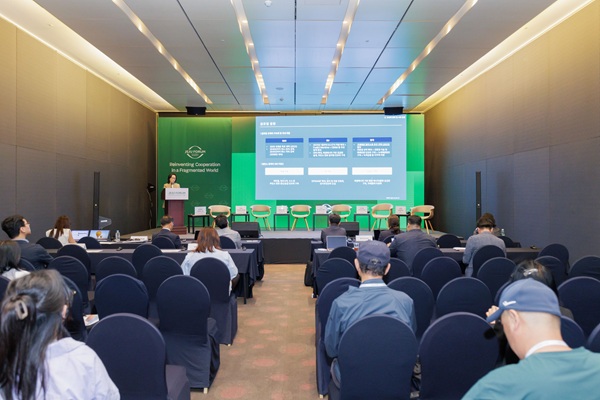
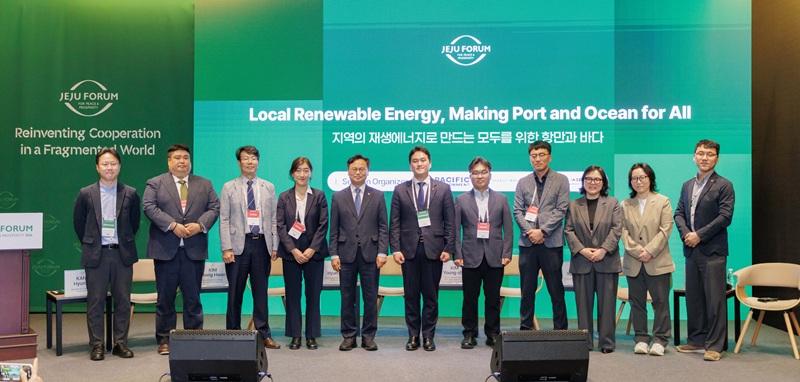
Ulsan Port Authority invited Pacific Environment, Hyundai Merchant Marine (HMM), Shanghai Municipal Transportation Commission (SMTC), Fung Research and Korea Research Institute of Ships and Ocean Engineering to the session “Green Shipping Routes and Maritime Logistics” at the Smart and Green Energy Maritime Conference in Gyeongnam, Republic of Korea. HMM outlined its climate commitments through the Net Zero Strategy and the Korea Research Institute shared new research on electric-propulsion zero-emission vessels and a vision for a Mokpo-Jeju coastal green shipping corridor.
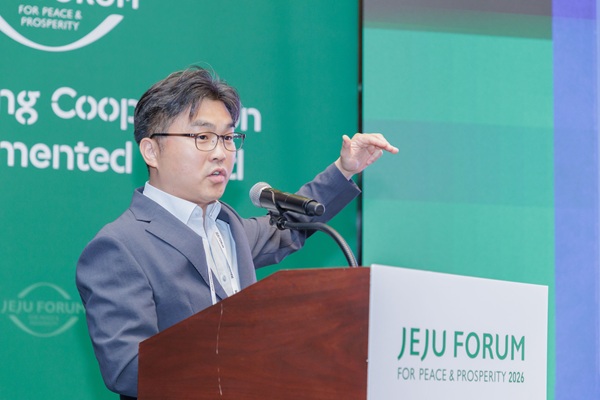
In their presentations, Wang Yanjia with SMTC, Freda Fung with Fung Research and Pacific Environment’s Davina Hurt highlighted concrete regional strategies and reaffirmed the opportunities for international cooperation linking East Asia and the U.S. West Coast. The presentations emphasized the critical role green shipping corridors and clean fuel deployment play in transforming ports into clean-energy hubs and the importance of government and port support to narrow the cost gaps for clean fuels. Pacific Environment will continue to play this geographic bridging role, fostering collaboration that accelerates the global transition to decarbonized shipping.
Pacific Environment facilitates national conversation on offshore wind and decarbonizing shipping and ports

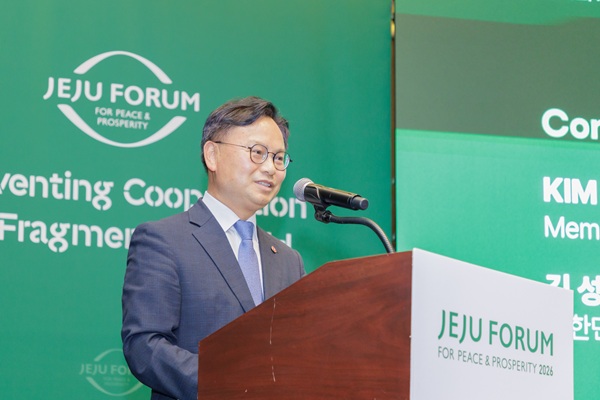
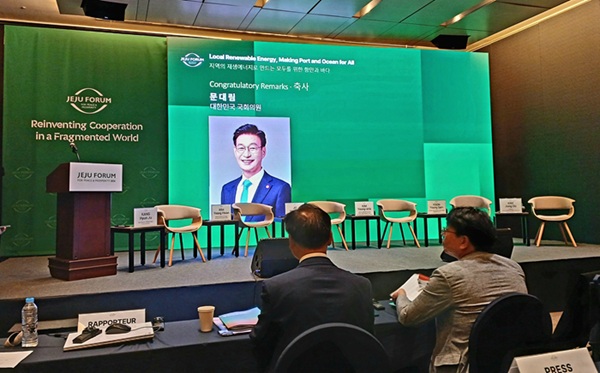
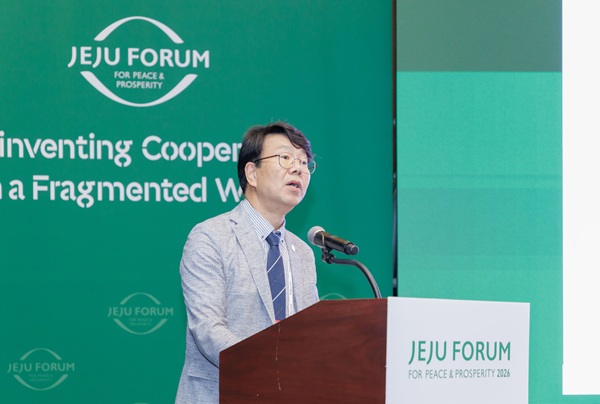
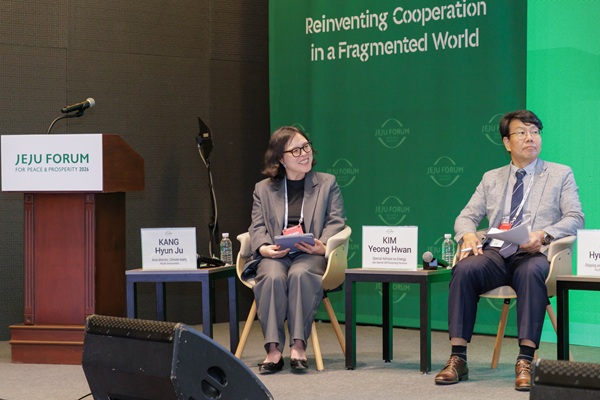
Solutions for Our Climate and Pacific Environment co-hosted a policy forum, “From Wind to Fuel: Offshore Wind and the Decarbonization of Shipping and Ports,” at the Republic of Korea’s National Assembly with Reps. Kim Won-i and Moon Dae-rim.
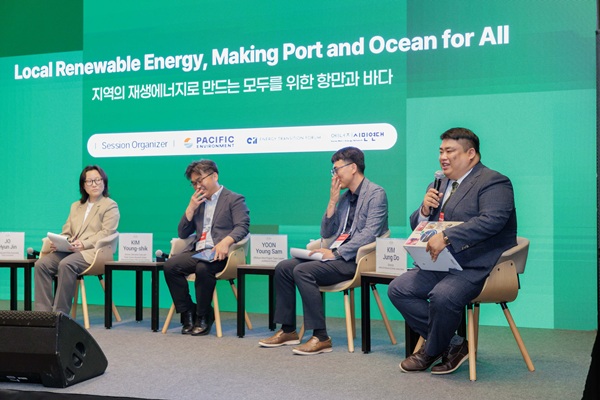
Presentations focused on key issues of the Offshore Wind Special Act — which shifted offshore wind development to a government-led system — the role of ports as renewable energy hubs and the idea to introduce electric vessels to reduce greenhouse gas emissions in domestic shipping. The forum reaffirmed that offshore wind can serve as a major driver of regional economic growth, while underlining the importance of public acceptance and community participation. It also suggested that green shipping corridors could be developed domestically using electric vessels that would require dedicated ship technologies and port infrastructure. Linking offshore wind power as an energy source for ports is still a new concept in Korea, but participants agreed it merits further policy review and a roadmap to support port and shipping decarbonization.
Climate Week NYC shows the future of shipping is already here
Pacific Environment staff were on the ground at Climate Week NYC, bringing visibility to the connection between climate and ocean shipping. Highlights from the week included a tour of Fortescue’s Green Pioneer, the world’s first dual-fueled ammonia-powered vessel. The vessel is a tangible demonstration that zero-emission shipping is here and that ammonia can be used safely as a marine fuel when proper protocols and technologies are in place — a critical step in building trust and momentum for clean shipping solutions.

At the Partnerships for the Future Summit hosted by the Consulate General of Denmark, our team connected with Arsenio Dominguez, secretary-general of the International Maritime Organization, who expressed cautious optimism that the IMO will adopt the proposed Net Zero Framework to drive down emissions from the shipping industry. Optimism for the momentum behind climate action was a key theme throughout the week. Former U.S. Climate Envoy John Kerry emphasized this point with his hopeful comments that the green energy transition will be the greatest economic transition since the Industrial Revolution and can’t be stopped.
Korea launches project to develop a national green shipping corridor model
Pacific Environment’s Republic of Korea team participated in a multi-stakeholder workshop to advise on the country’s green shipping corridors. This three and a half year long collaborative project aims to demonstrate carbon-neutral fuel bunkering technologies and trial operations (including methanol and ammonia bunkering), design policies and international standards to support green shipping corridor expansion and develop a Korean feasibility model for green shipping corridors. By establishing the necessary technologies and policies to support the safe deployment of new green technologies and fuels, the project aims to contribute to the country’s and the International Maritime Organization’s decarbonization goals while also creating jobs through the expansion of its shipping industry.
The Korean Register leads this initiative with participation from various research universities, Ulsan Port Authority, Busan Port Authority, industry partners including HMM and HD Hyundai and government-affiliated institutions like Korea Maritime Institute, Korea Maritime Transportation Safety Authority and Korea Institute of Maritime and Fisheries Technology.
☞ Southern California | Sign our petition to call on the South Coast Air Quality Management District to pass a strong Ports Indirect Source Rule that’ll put an end to life-shortening pollution at the San Pedro Bay ports.
☞Republic of Korea | We’re hiring! Pacific Environment seeks a Country Director, Republic of Korea to support our work in Korea focused on the climate emergency and maritime shipping. We are excited to pursue new opportunities to achieve the transition to zero-emission shipping and more in South Korea.
☞ California | We’re hiring! Pacific Environment seeks a State Climate Policy Manager to advance our climate priorities and provide critical policy support for Pacific Environment’s campaigns on zero-emission shipping and ports in California.
☆ Highlight: Plugged in for a cleaner future: Seattle and Tacoma lead shore power advances
Investments in shore power infrastructure at the Port of Seattle and Port of Tacoma “show what’s possible when ports commit to cleaner operations — and our communities deserve nothing less,” writes Pacific Environment’s Climate Campaign Director, Ports, Fern Uennatornwaranggoon. “Seattle and Tacoma are proving that strong economic ports can also be clean ports.”

Shipping news
▲ Shipping launches first training playbook for handling ammonia, methanol and hydrogen
▲ Container shipping leads maritime transition with over 500 alternative-fueled vessels on order
▲ Alternative marine fuels uptake will speed up after 2030, shipping executives say
▲ A trillion-plus investment gap threatens to stall shipping’s energy transition, new report reveals
Environment + climate news
♠ China’s clean energy boom is denting fossil fuel demand
♠ Climate change ‘beyond scientific dispute,’ National Academies report says
♠ Trump administration dissolves group that authored controversial report sowing doubt in the severity of climate change
♠ The world’s watching. Greens are unsure what to say.
October feature | Our obligation to our oceans
On Sept. 25, the world celebrated World Maritime Day, with the theme “Our Ocean, Our Obligation, Our Opportunity” reminding us of our responsibility and our opportunity to care for the ocean. Shipping is the engine of global trade but it’s also one of the dirtiest industries on the planet, responsible for nearly 3% of worldwide greenhouse gas emissions and major sources of toxic air pollution.

At least 31 million people in the United States live within three miles of a major port. Every day, people living near ports breathe in harmful diesel exhaust. This World Maritime Day, we were reminded that the shipping industry must play a leading role in building a healthier, climate-safe future. The good news: Momentum for clean shipping is accelerating. From local actions in California and Washington, to national legislation in Congress, to groundbreaking but unfinished progress at the International Maritime Organization, the world is beginning to turn the tide on dirty shipping. Pacific Environment will continue to fight for ambitious, just and urgent action to hold polluters accountable and ensure shipping transitions to a truly zero-emission future. Read more about the work happening to clean up the shipping industry here.
Thanks for reading!
Find us @pacenvironment on social!
Pacific Environment confronts our most urgent environmental issues by connecting local and global movements,
catalyzing policy change and inspiring action for the benefit of people and our planet. Together,
we promote a healthy climate, reduce pollution and conserve biodiversity for an equitable and thriving future.
Pacific Environment
1012 Torney Ave
San Francisco, CA 94129
United States
If you believe you received this message in error or wish to no longer receive email from us, please unsubscrib